
The Market Research Step Every Author Skips

Did you know that 85% of books sell fewer than 200 copies? That’s because most authors write books they are passionate about, not books that readers actually want to buy and read.
The secret to writing a successful book is more than passion. Your passion is the source of authenticity in your writing, but passion alone is not enough.
You can become successful when you combine your passion with market research. You want to verify people already want to read what you want to write. Find your book buyers before you start writing
Will People Care About Your Book?
I had a client, Maya, who spent months crafting her memoir. She poured every ounce of her pain and hope into the pages, believing her story of surviving abuse would help others heal.
Her book was the lifeline she wished she’d had years ago.
When the book was published, she imagined it flying off shelves, reaching countless survivors like herself.
But reality struck hard. Sales were dismal, and reviews, where they existed, mentioned the lack of clear focus. She said, “I guess I didn’t even know who my readers were.”
Her situation wasn’t new to me. I’ve encountered it with most of my first-time writing clients over the years.
Yes, I know you are creative and have no time for market research. That’s the business side, and you’re not interested.
However, you must be interested in today’s Self and Indie publishing world.
Writing a book is the easy part; marketing a book is the hard part.
Not understanding that means you’ll invest all your blood, sweat, and tears in a dud.
Myth # 1
Not “everyone” will be interested in your book. People are buying fewer books, and when they do buy, they almost always have a narrow field of interest.
Few Victorian Romance readers buy books on auto mechanics. In fact, Victorian Romance readers rarely buy a Contemporary Romance novel. Yes, niches are that narrowly defined.
People are particular, so not everyone will be interested in your book.
Myth #2
Your passion alone will drive you to write and publish a book, “If it only changes one life.”
No, writing a book to change ONE life is not enough. Maya could have done that by visiting her local women’s shelter.
You must combine passion and market research to write a book that reaches thousands as it should. Market research helps authors understand what readers want, what gaps exist in the market, and the competition you face.
Here’s how to do it.
Identify and Understand Your Target Audience
Knowing your audience is like building a roadmap for your book. Without it, you’re wandering aimlessly.
You must ask yourself, “Who would want to read this book?” Define your audience by age, gender, interests, and profession.
Regardless of the topic, visit forums like Quora, Reddit, or Facebook groups where your potential readers hang out. Observe the questions they ask, the topics they discuss, and the problems they want solved.
The key idea is that you are NOT writing the book for yourself. You are writing your book for others. You must know who they are before you start spilling ink.
Create an ideal reader persona—an avatar. This fictional character represents your typical reader, detailing their motivations, challenges, and what they seek in a book. Write for that person.
How do you identify the persona of these target readers?
- Visit sites like Quora, Reddit, and Facebook. People talk freely about their problems and seek solutions. It is a great way to discover your target audience and discover real-life needs.
- Consider conducting surveys. Use tools like SurveyMonkey or even simple social media polls to gather feedback.
- The most important thing you can do is talk to people in person and discover their problems.
Identifying and understanding the needs of your target audience can save you from making costly false assumptions.
Validate Your Book Idea
The next step is to validate your idea. There are several things you want to validate before you start writing.
- You want to verify there is a market for your book. You want to see what is selling on Amazon, the world’s largest bookstore.
- You want to analyze the competition. What books are selling in your genre, when they were published, the page count, and their selling price.
- Also, you want to take a look at their covers.
Importantly, you want to know approximately how many dollars books make each month. You probably don’t want to write a book in that genre if they make just a few dollars.
If it’s making big bucks, you will probably want to get some of that by writing a better book on the topic.
How can you get this kind of information? The best tool for doing that is Publisher Rocket.
How to Analyze the Competition
Here is how Publisher Rocket will help you see if anyone is interested in your book before you write your first word.
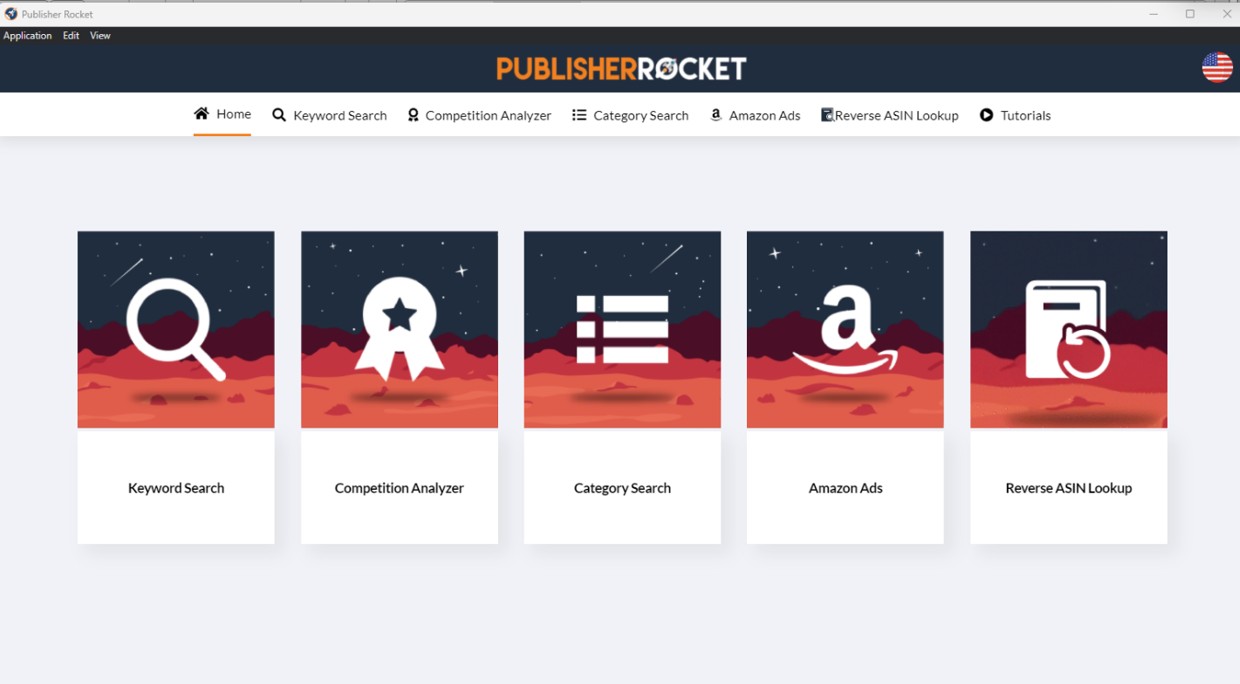
Here is the home screen with simple choices:
1. You can search keywords to discover books in your genre.
2. You can do a competition analysis.
3. Category searches.
Also, thias software enables you to consider develop Amazon ad campaigns and do other look-ups. Explore them to learn more.
A quick look at the Competition Analyzer, a tool you should use before you write your first word.
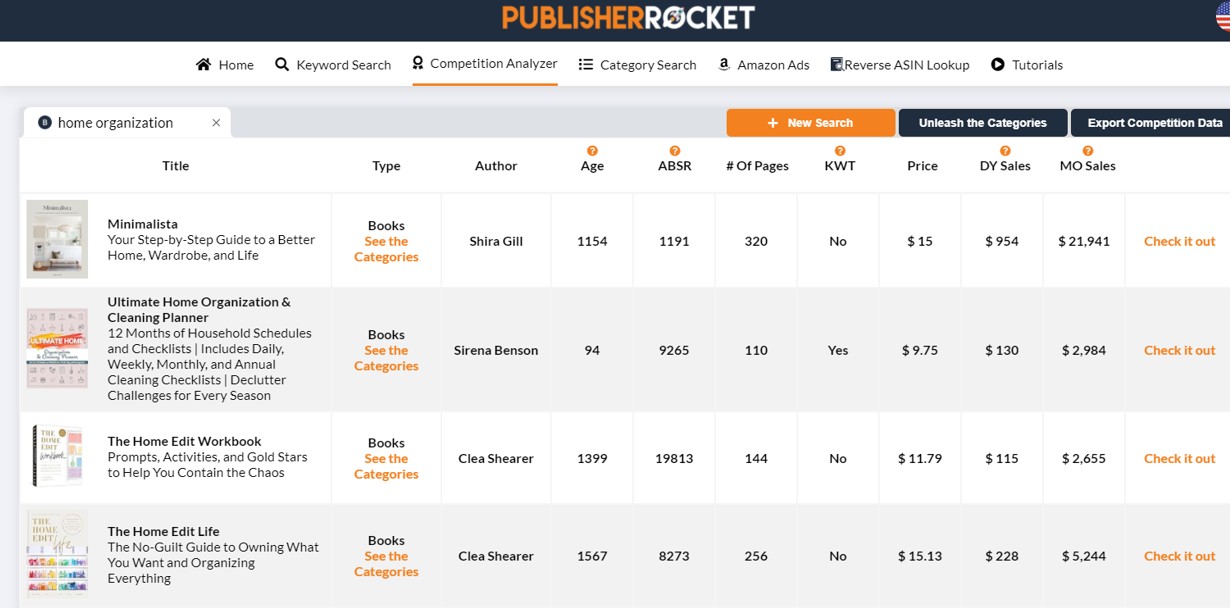
In this example, I typed “Home Organization” into the search box and got all the Amazon books on those topics.
The image shows four here, but you can scroll down in the actual program to see scores or hundreds more.
TITLE AND COVER IMAGE
This is the PRINTED book, and other types are ebooks or audiobooks. There are different stats for each type.
But look at all the data available:
THE AUTHOR’S NAME
THE AGE OF THE BOOK
The top seller in this example has been around for 1154 days, a little over three years.
ASBR
The ASBR is the Amazon Best Seller Rank. That gives you the big picture about sales rank. A low number is good.
NUMBER OF PAGES
This is important. Your book should be the same or higher. If not, you need to lower the price of your book because readers are looking for value for money.
KWT
KWT stands for Key Word in Title. People don’t browse in brick-and-mortar bookstores anymore; they browse by doing searches. Keywords are important, and it’s good when they are in the title.
But you notice that the keyword—”Home Organization”—in this example is not in the tile. Yet, the authors we see are getting success without it. Keywords could be the topic of an entire video, so we’ll leave it at that in this overview.
BOOK PRICE
The top-selling book we see is $15.
This author has daily sales of $954! Gross monthly sales are $21,941!
If you buy Publisher Rocket, as I strongly recommend, you want to look at the best and worst sellers and learn from them all.
This is probably the most important thing I have to say on this topic:
Don’t write a word until you discover if there is a market for your book.
Publisher Rocket is inexpensive, especially considering how much time and frustration it will save you. But you need to try it since you can use it free for 30 days.
Put Your Market Research into Action
Now that we’ve covered the steps let’s recap how you can turn research into a solid writing plan.
- Use your audience insights to tailor your book’s content. Your passion for the topic is essential, but understanding your readers will help you write a better book.
- Make your book different and better by using competition analysis. Focus on solving a problem or addressing a need in a way others haven’t. I strongly recommend Publisher Rocket to discover what your competition is doing and to discover market potential.
- Keep testing and refining. Even after you start writing, stay connected to your audience through social media or personal contact to keep their needs front and center.
By doing market research, you’re not just writing a book—you’re creating something useful that readers are excited to buy. You combine your passion and market research to get the results you dreamed of.
That’s the difference between hoping for an audience and knowing you’ve got one.