
The Rhythm and Mood Tricks That Make Edgar Alan Poe Timeless

Nearly two centuries after they were written, the stories and poems of Edgar Allan Poe still scare the bejesus out of readers. Few authors enjoy that kind of longevity, especially in a world saturated with entertainment and instant distraction. Yet Poe remains not just relevant, but potent.
Why?
The answer lies not only in his eerie subject matter, but in how he understood the human mind, language, and fear itself. Beneath the darkness of his work is a disciplined craftsman, an innovator, and a writer whose life—marked by ambition, loss, and obsession—shaped literature forever.
Who Was Edgar Allan Poe?
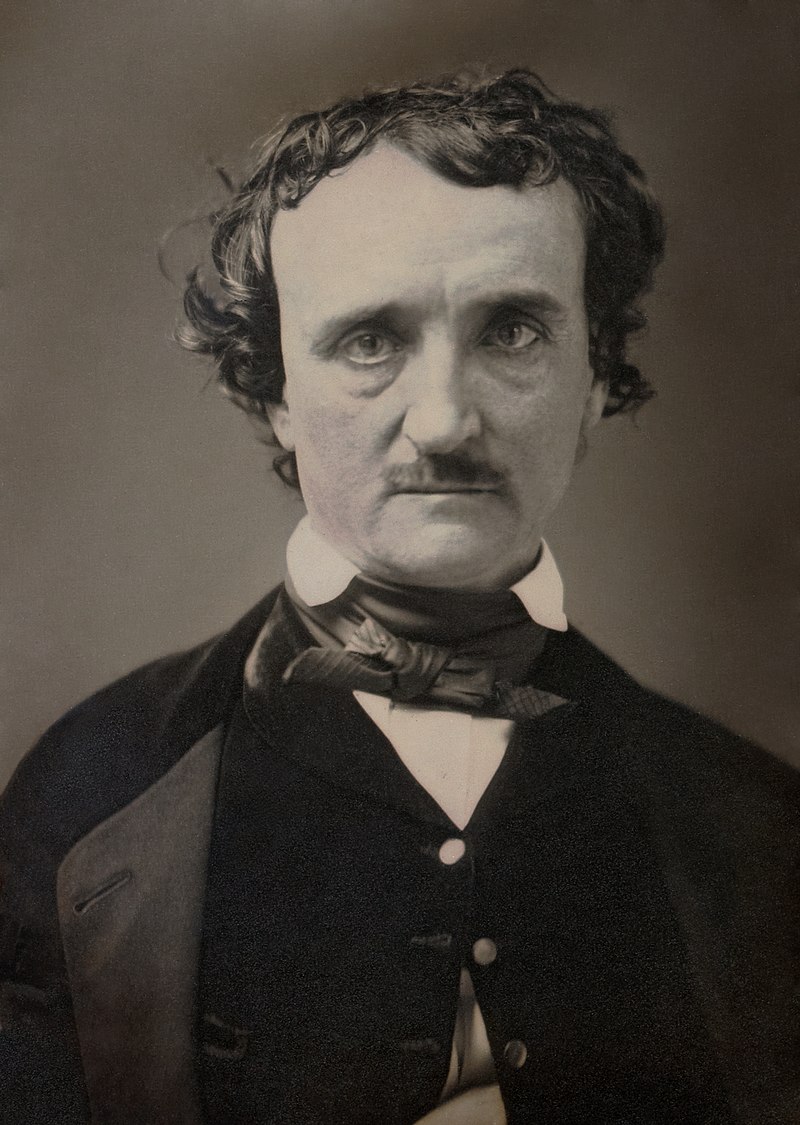 To understand Poe’s writing, we first have to understand the man.
Born in Boston in 1809, Poe was orphaned at a young age when both of his actor parents died. He was taken in by John and Frances Allan of Richmond, Virginia, though never formally adopted. His foster father provided him with an excellent education, but their relationship was strained, especially over money and Poe’s determination to pursue a literary career.
Contrary to the popular image of Poe as merely a drunken eccentric, he lived a surprisingly structured life at times. He served in the military and briefly attended West Point, where his talent for discipline clashed with his disdain for authority.
Poe’s personal life was deeply tragic. In 1836, he married his cousin Virginia Clemm, who was only 13 years old at the time. Her death from tuberculosis in 1847 devastated him, accelerating his physical and mental decline. Poe himself died in 1849 under mysterious circumstances that remain unresolved, adding a final layer of intrigue to his legend.
Poe’s Unique Writing Perspective
Today, Poe is almost exclusively associated with horror, but during his lifetime, he was far more versatile. He worked as an editor for major periodicals such as the Southern Literary Messenger and Graham’s Magazine, shaping literary tastes as much as contributing to them.
He wrote sharp literary criticism, biting satire, and essays on science. In fact, Poe was one of the earliest writers to blend speculative science with fiction, helping pioneer what we now call science fiction.
So why is he remembered primarily for his terrifying stories?
Because those stories tap into something universal—and timeless.
Poe Explored the Human Psyche
Poe’s greatest insight was that the most terrifying monsters don’t live in castles or graveyards. They live inside us.
In The Tell-Tale Heart, guilt becomes an audible presence, beating louder and louder until it drives the narrator to confession. In The Raven, grief blurs the boundary between memory and madness. In The Black Cat and The Fall of the House of Usher, sanity feels fragile, temporary—always on the verge of collapse.
Poe’s horror is internal rather than external, which is why it still works. Fear of guilt, obsession, isolation, and mental unraveling hasn’t changed in 200 years. We may have smartphones now, but our psychological shadows remain the same.
Equally important is Poe’s mastery of atmosphere. He could take a single candlelit room and make it feel like a tomb. His rhythmic language creates a sense of inevitability, like footsteps echoing behind you that never quite stop. That slow, oppressive buildup is what keeps readers trapped inside his stories.
Poe and the Birth of Detective Fiction
One of Poe’s most overlooked contributions is his role in creating detective fiction. With the character C. Auguste Dupin in The Murders in the Rue Morgue, Poe established the template for the brilliant, analytical detective.
Dupin’s logical reasoning directly influenced later characters, most famously Sherlock Holmes. This innovation reveals Poe not as a niche horror writer, but as a literary architect whose influence spans multiple genres.
Selected Works Every Writer Should Study
The Raven
Published in 1845, The Raven cemented Poe’s fame. The poem follows a grieving man mourning his lost Lenore, descending into madness as a raven repeats its relentless refrain of “Nevermore.” Its musicality, strict meter, and emotional precision make it unforgettable.
Many readers interpret Lenore as a symbolic anticipation of Virginia’s death. Whether intentional or not, the poem demonstrates Poe’s belief that great writing comes from the careful orchestration of emotion and sound—a principle he articulated in his essays on poetic composition.
The Tell-Tale Heart
This story is a masterful example of psychological manipulation. The narrator insists on his sanity while meticulously describing murder and concealment. Every sentence tightens the emotional screw.
For writers, this story is worth studying purely for its mechanics: pacing, repetition, and how word choice alone can destabilize a reader’s emotions.
The Fall of the House of Usher
Here, Poe’s gothic style reaches full maturity. The decaying mansion mirrors the deteriorating minds of its inhabitants, blending setting and psychology into a single symbolic structure.
Writers can learn from Poe’s use of inanimate objects to evoke human emotion, making the environment itself a living force in the story.
Writing Skills Inspired by Poe
Embrace the Power of Atmosphere
Poe proves that mood is not decoration—it is narrative fuel. Regardless of genre, writers benefit from treating setting, tone, and sensory detail as central elements rather than background filler.
Explore Deep Psychological Themes
Fear, guilt, love, obsession, and grief give stories weight. Poe never avoided emotional intensity, and modern writers shouldn’t either. Psychological depth is what makes fiction linger.
Innovate Within Your Genre
Poe invented forms because he wasn’t afraid to experiment. His willingness to push boundaries is a reminder that originality often comes from bending—or breaking—existing rules.
Embrace the Legacy of Edgar Allan Poe
Poe’s enduring power lies in his courage: the courage to look directly at the human mind and write what he saw there. For writers today, his legacy is an invitation.
Study his Precision
Experiment with atmosphere. Transform personal struggle into a universal truth. Delve deep, build immersive worlds, and don’t shy away from the darkness—because that’s often where the most honest stories live.
Have a great writing day!