
The Wild Writing Life of Charles Bukowski

Ever wondered how a boozy, cantankerous old man became one of the most celebrated poets and novelists of the 20th century, a status that continues today?
Charles Bukowski’s life and work prove that brilliance can emerge from the most unexpected places, even the dimly lit corners of a seedy bar.
They called Bukowski, the “poet laureate of lowlife,” who turned his gritty, troubled existence into art that still captivates readers worldwide.
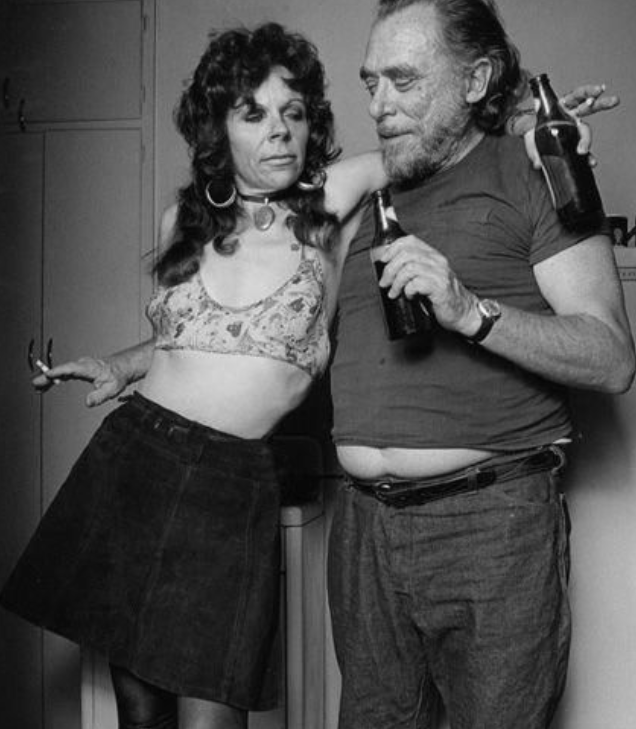
Bukowski with the two things he loved as much as writing.
He’s the writer who said, “Find what you love and let it kill you.”
Let’s dive into Bukowski’s life and books and see if we can gather some tips that will help you be a better writer.
The Life of Charles Bukowski
Charles Bukowski was born in 1920, and he passed in 1994. He had a German-American heritage but was 100% American poet, novelist, and short story writer.
He was known for his raw, gritty voice and unflinching portrayal of the darker side of life. Bukowski’s work resonates with authenticity and brutal honesty.
Early Life
Bukowski’s father was an abusive authoritarian who often beat him. These harsh conditions shaped Bukowski’s worldview, filling him with anger, mistrust, and a hunger to escape.
He wasn’t handsome because his face was deeply scarred from a mega case of acne in his youth.
Because his parents came from Germany, he spoke with a think German accent from childhood. To escape bullying over his accent, Bukowski claimed he became
invisible in school. “I was just this shadow walking through halls.”
Yeah, lots of writers have felt that sense of alienation for one reason or another.
Charles Bukowski didn’t want to be himself and he adopted the name Henry Chinaski in Ham on Rye, and his other semi-autobiographical writings.
His formative years were also defined by his introduction to literature. A librarian handed him Ask the Dust by John Fante, a book that inspired him to write.
If you want the key to unlock Bukowski’s storytelling style, read Ask the Dust.
Despite his rough upbringing and preference for an alcoholic lifestyle, Bukowski’s writing struck a chord with many, making him a literary icon.
His Relationship with Alcohol and Women
Bukowski’s relationships with booze and women were both tumultuous and central to his identity as a writer.
He craved intimacy but also felt stifled by it. This duality is evident in his work, where women are alternately muses and tormentors.
Despite his self-destructive tendencies, Bukowski found moments of tenderness and connection, notably with Linda Lee Beighle, whom he married later in life.
The Road to Becoming an Admired Writer
Bukowski didn’t achieve fame overnight. His path was marked by dead-end jobs and years of obscurity.
He spent a decade drifting between jobs, working in warehouses, slaughterhouses, and finally the US Post Office. These experiences filled his writing with gritty, working-class realism.
He began publishing poetry in small literary magazines in the 1950s, gaining a cult following for his brutally honest style.
Bukowski’s turning point came in 1969 when publisher John Martin offered Bukowski $100 a month to quit his Post Office job and write full-time. That was a deal Bukowski called “an insane risk.”
Bukowski’s unapologetically raw voice struck a chord with readers disillusioned by mainstream literature. By the 1970s, he became an underground icon, celebrated for his defiance of literary norms.
Bukowski’s Top 3 Books
Bukowski wrote six novels between 1971 and 1994. He also wrote four nonfiction books.
He published large numbers of poems in the short-lived counter-culture literary magazines of the day. Many of these publications had such a small circulation they were mimeographed, not printed.
Today, there are over 40 different titles of his collected poetry, so he was a prolific poet. He wrote short stories too, and they are included in some of these collections.
Among his extensive body of work, three books stand out as essential reads for understanding Bukowski’s genius.
Others might disagree with the three I have picked. That’s okay, because they are all worth reading. I especially wouldn’t mind if someone insisted that Factotum was one of his better novels. It’s the prequel to Post Office and about his drunken, wandering days.
 Post Office was the first of his novels that I read.
Post Office
Post Office is a semi-autobiographical novel that chronicles Bukowski’s soul-crushing years as a postal worker. It’s full of his trademark wit, cynicism, and observations about the monotony of life.
Bukowski is said to have written this book in just three weeks, fueled by cheap wine and cigarettes.
The reason it is so revered is that it captures the absurdity of working-class struggles with brutal honesty and humor.
If you’ve ever worked at a repetitive, mindless job, you’ll howl with laughter at how he perfectly captures the experience.
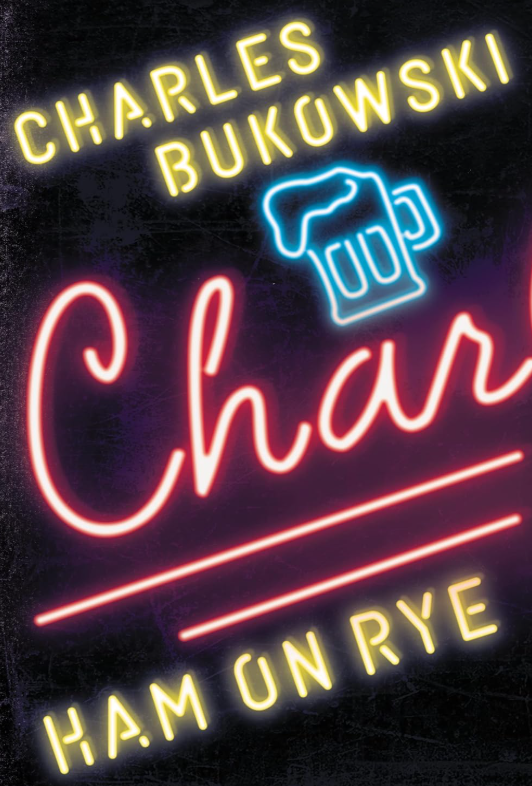
Ham on Rye
Ham on Rye is a coming-
of-age novel, this book delves into Bukowski’s tortured adolescence as Henry Chinaski. It’s darker and more introspective than his other works.
The novel’s title is a nod to Bukowski’s love for sandwiches, a small comfort during hard times.
This novel reveals the pain and resilience that shaped Bukowski’s defiance of conventional society.
Remember, he worked at menial jobs in LA and around the country, and was a literary unknown for about the first 40 years of his life. For at least 20 years of that he was a heavy drinker and remained so the rest of his life.
 Love is a Dog from Hell
 Love is a Dog from Hell
Love is a Dog from Hell is a poetry collection explores the complexities of love, lust, and loneliness with raw, unfiltered emotion. Really raw.
If you only read one book of poetry this year, read this one. One poem features Bukowski contemplating a dying cockroach as a metaphor for his relationships. It’s brilliant.
There is a kind of subterranean joy in this book of poetry. It showcases Bukowski’s ability to find beauty and truth in life’s most banal moments.
By the way, Bukowski also wrote the screenplay for the 1987 black comedy “Barfly.” It is semi-autobiographical and about Bukowski’s drunkest days. It stars Mickey Rourke as Bukowski’s alter ego, Henry Chinaski. Faye Dunaway co-stars, so it’s worth a look.
Bukowski himself has a cameo role it… as a drinking man at the bar.
Three Writing Tips from Bukowski
Despite his chaotic life, Bukowski’s work offers valuable lessons for writers.
You never want to adopt every writing tip you hear. You just want to pick the ones that will be beneficial to you. That said, I think every writer could benefit from what we learn from Bukowski.
Embrace Your Flaws
Bukowski didn’t sugarcoat his life. Instead, he leaned into his flaws and failures, turning them into compelling stories.
Write about what’s real to you, no matter how messy or unflattering it might seem. Authenticity results in relatable and engaging stories.
Write Relentlessly, Without Excuses
Bukowski wrote every day, whether he felt inspired or not. He believed discipline was more important than fleeting bursts of creativity.
The lesson here is that we writers must treat writing as a habit, not a hobby. Sit down and write, even if you think the writing is bad.
Bukowski’s prolific output came from his commitment to the craft, not waiting around for inspiration.
Be Fearless
Bukowski’s unapologetic honesty and willingness to tackle complex subjects make his work stand out. He teaches writers not to shy away from difficult topics or emotions in their writing.
Bukowski was often criticized for his crude style, but he never wavered from his voice. He wrote for himself and his audience, not for approval.
Find your voice and stay true to it, even if it’s unconventional.
Be a Little Bukowski
If you’re a Bukowski fan, you know “Don’t Try” is on his tombstone. That choice as his epitaph has puzzled many. This seemingly contradictory advice encapsulates his philosophy.
Bukowski believed that creativity should flow naturally, not be forced, or contrived.
And yes, it was also a line from one of his early poems.
Bukowski’s success came from his unrelenting authenticity and refusal to conform. This reminds writers to let passion guide their work rather than striving for perfection.
Ready to channel your inner Bukowski? Here’s how:
- Write about your life honestly. Don’t shy away from the ugly parts. Authenticity connects with readers.
- Make writing a daily habit. Set aside time each day to create, no matter your mood.
- Embrace rejection and criticism. Focus on writing your truth, not pleasing everyone.
Bukowski’s life was chaotic, his work unpolished, but his commitment to raw honesty made him unforgettable. Maybe it’s time to embrace a little chaos in your own writing.